














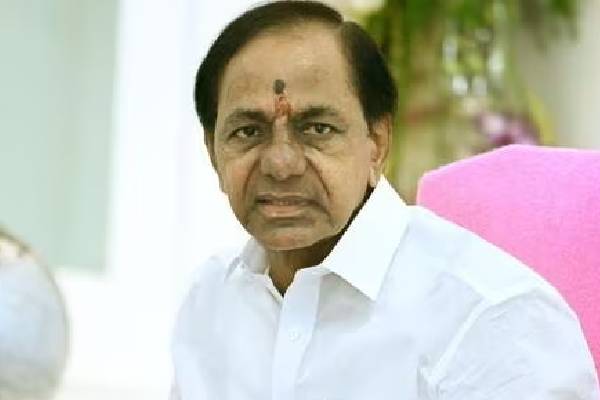
Hyderabad: A senior BRS leader who met K. Chandrashekar Rao in the recent past recalled a small but telling moment. During the meeting, KCR was quietly relishing a delicacy served to him – unhurried, attentive, fully present, enjoying every bite.
It reminds of KCR’s own words from his time in office: “Leakage of dynamism is an issue. We often worry about immediate past and immediate future and thus we live only 50% in present and the productivity doesn’t come. Whatever you want to do, do at its immense. Even if you eat, do it focusedly,” he once said.
For years, that line mirrored his political method. As the face of the Telangana movement and later as Chief Minister, KCR functioned with intensity. Major projects, welfare expansion and administrative decisions were executed at scale. His leadership style was immersive and commanding.
KCR always believed in doing things big. Not small corrections. Not half steps. When he introduced Rythu Bandhu, it covered farmers across the state. The redevelopment of Yadadri Temple was undertaken on a grand scale. The Dr. B. R. Ambedkar Telangana Secretariat was built to stand out. Projects such as the Kaleshwaram Lift Irrigation Project, Mission Bhagiratha and Mission Kakatiya were designed for visible impact.
His style was clear: if you do something, do it fully. At 72, however, the circumstances are different.
Following the 2023 Assembly defeat, KCR was summoned for questioning in connection with the alleged phone tapping case and developments related to the Kaleshwaram project. These episodes brought legal and reputational pressure. In such phases, political leaders often limit public exposure to avoid statements that could complicate matters further.
At the same time, his silence is not entirely out of character. KCR has never been a leader who reacts daily. Even during his peak years in power, he would stay away from constant commentary and then return with calibrated, decisive moves. He has preferred controlled entry over continuous engagement.
There is also a political calculation that cannot be ignored. Opposition leaders sometimes step back and allow the government to carry the full burden of governance. Instead of daily confrontation, they wait for public mood to evolve.
Yet, the duration is notable. His relative quiet has stretched close to two years. In a political culture built on constant visibility, such absence becomes a statement in itself.
Supporters describe it as strategic restraint. They argue that constant reaction leads to “leakage of dynamism” and that KCR may be conserving political energy for a calibrated return.
Critics argue that prolonged silence risks weakening organisational momentum, especially during a rebuilding phase. Opposition especially CM Revanth Reddy are consistently building the narrative that he is wasting public money by taking salary and sitting at home, without becoming voice of the people.
His philosophy emphasised living fully in the present. That raises the central question: what does being “100% in the present” look like for a leader out of power? Why is he not living fully in his role as opposition leader?
Is this phase a deliberate pause before another large move? Or does extended silence signal a slower political rhythm at this stage?
For someone who always preferred magnitude over moderation, the real test now is not about past projects but about the scale and timing of his next step.
One thing is certain: when a leader known for scale speaks about living “100% in the present,” every pause also becomes part of the story.