
























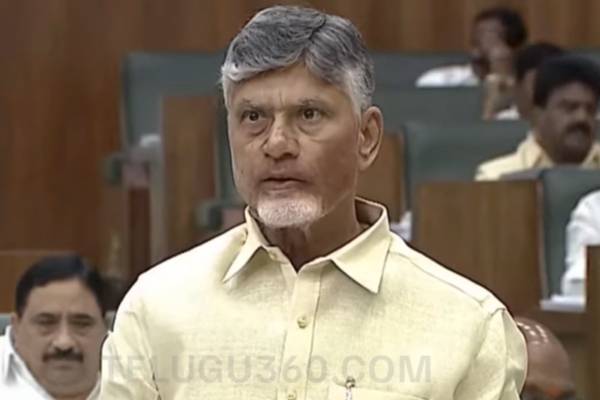
Andhra Pradesh Chief Minister N. Chandrababu Naidu has called for a major shift in how the state approaches demographic planning. Speaking in the Assembly, he said the time has come to focus on population management rather than traditional population control policies. He warned that failing to act now could create serious challenges for the state in the coming decades.
The Chief Minister announced that the government is preparing a comprehensive Population Management Policy. He said the current Total Fertility Rate in the state stands at 1.5. The government aims to raise it to 2.1 to ensure long-term demographic balance. To encourage larger families, the government plans to offer a cash incentive of Rs. 25,000 for families that have more than two children. Chandrababu Naidu said this incentive could become a game-changer in reversing the falling birth rate.
He urged Members of the Legislative Assembly to hold discussions at the grassroots level before the policy is finalized. The government will gather feedback from across the state before giving the policy its final shape. The Chief Minister said the new policy will be implemented from April 1. Andhra Pradesh aims to become the first state in India to introduce such a population management model.
Chandrababu Naidu also announced that the earlier rule which disqualified individuals with more than two children from contesting elections has been removed. In a light remark he said that in the future the state may even consider the opposite approach if birth rates continue to fall. He explained that the state is moving from a population control mindset to a population care approach.
The policy framework focuses on five key pillars which include motherhood support, empowerment, skill development, welfare and healthcare initiatives. The government also plans to reduce the percentage of family planning operations from 75 percent to 50 percent in order to encourage balanced population growth.
The Chief Minister highlighted another concern which is infertility. Out of 90 lakh couples in the state nearly 11 lakh face fertility related issues. The government will extend support to help these couples access treatment and achieve parenthood.
Chandrababu Naidu also stressed the need to improve awareness about health and social issues. Teenage pregnancy in the state currently stands at 8.8 percent. The government aims to bring this down to 3 percent through education and health programmes.
The government also plans to expand opportunities for older citizens. People above the age of sixty will be encouraged to remain active in the workforce. Around fifty thousand employees who are nearing retirement will receive training in healthcare support services. This will help them find new earning opportunities after retirement.
To strengthen childcare services the government will expand the child care sector and train ten thousand certified caregivers. This initiative will create employment while also supporting families that need professional care for children and elderly members.
Chandrababu Naidu said the state earlier focused mainly on family planning programmes. Now the discussion has shifted to population management in order to maintain a healthy demographic structure. A draft policy is currently under preparation. After one month of public discussion the final version will be announced.
He explained that a fertility rate of 2.1 is considered ideal for sustainable population levels. If the rate falls too low the number of young people declines which eventually reduces the workforce. He cited examples from countries such as Japan and South Korea where fertility rates have dropped sharply. Japan has a rate of 1.2 while South Korea has fallen to 0.7 which has created long term demographic challenges.
The Chief Minister also presented statistics about Andhra Pradesh. In 1992 the state had a fertility rate of 3 which has now fallen to 1.5. Tamil Nadu currently records 1.4 while Kerala stands at 1.6. Bihar continues to have a higher rate of around 3. Each year around 6.7 lakh children are born in Andhra Pradesh.
He said nearly 57 percent of families stop after one child while 32 percent have two children. Only 9 percent of families have more than two children. At present about 10 percent of the population is above sixty years of age. This number is expected to rise to 23 percent by 2047.
Chandrababu Naidu warned that if the state does not intervene early the fertility rate could fall even further. A shrinking young population could lead to labour shortages and economic challenges in the future. He stressed that population planning must focus on both demographic balance and human resource development.