

















When a leader’s birthday is turned into a collection drive, it’s not celebration – it’s the merciless milking of his own party.
Amaravati – December 21, the birthday of YSR Congress Party chief Y.S. Jagan Mohan Reddy, is no longer just a date of celebration. It has become a structured revenue exercise – one that critics say reflects how his sakshi media weaponized to extract money from within the party itself.
Each year, YSRCP leaders, local in-charges, and party sympathizers race to publish birthday greetings for Jagan. They take the form of full-page ads in newspapers, banner placements, and televised birthday messages – especially on Sakshi, the media house owned by Jagan’s Family and still functioning under his control.
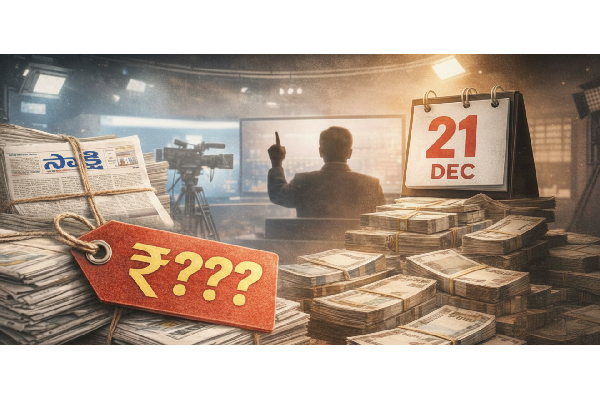
But behind the public display of affection lies an uncomfortable truth: the alleged monetization of these greetings through inflated ad rates and internal pressure. Multiple sources within the party claim that Sakshi significantly hikes its rates around December 21, converting what should be a gesture of loyalty into a mandatory financial obligation.
As per sources even basic 10-second birthday slots on Sakshi TV, which typically cost ₹2,500, were being billed at ₹6,000 during the birthday. The cumulative costs run into 10 lakhs when ads are repeated across formats – a burden many local leaders feel compelled to bear, not out of enthusiasm, but due to pressure from sakshi.
It doesn’t stop at inflated pricing. District-level functionaries allege that they are contacted directly by Sakshi’s marketing team, who actively push ad bookings and pitch larger formats and prominent placements. “Bigger photo, better visibility, more attention,” one local leader recounted being told. The implication is clear: the more you spend, the closer you’re seen to the leadership.
For a media house owned by the leader being celebrated, such a sales strategy invites serious questions. This isn’t a typical media transaction – it’s a loot
YSRCP leaders say they are not just encouraged but expected to spend -with some districts even facing informal ad targets. “It’s no longer voluntary,” said one district coordinator. “It’s like paying dues to stay in the good books.”
To be clear, ad rate surges around high-demand days aren’t unusual in the media industry. Festivals, election seasons, and major public events often come with a pricing premium. But in this case, the premium isn’t for an external product – it’s for showing loyalty to the very person who owns the Sakshi platform. And the buyers aren’t businesses – they’re party loyalists and public representatives.
The result? A distorted dynamic where devotion is billed, and visibility is sold – not earned.
Several questions now hover over the optics of this arrangement:
• If Sakshi claims to be a “people’s platform,” why is it charging its own party ecosystem such steep prices to wish its founder?
• If the party is in opposition, what’s the urgency behind inflating the appearance of internal support?
• If prominence can be purchased, what does that say about the culture of recognition within the YSRCP?
Sakshi may defend its December 21 pricing as standard market practice. But the lived experience of the cadre tells a different story one where party loyalty is measured by ad spend, and greetings feel more like invoices.
At a time when the party is having hard time recovering in the wake of electoral loss, this model of internal monetization only deepens resentment. Many see it as a top-down financial extraction – a ritual where the grassroots are drained to fund the optics of power at the top.
If Sakshi believes its practices are above board, it should release transparent rate cards for the birthday period and disclose whether any internal targets were communicated to party units. Until then, the perception remains stark: Sakshi isn’t just broadcasting birthday wishes : it’s running an extortionate pay-to-please racket.