























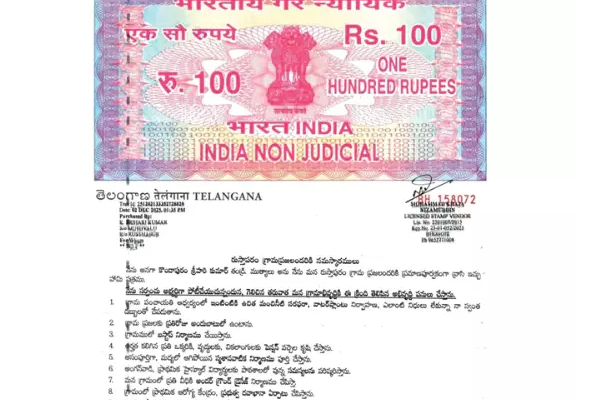
In the ongoing Gram Panchayat elections in Telangana, a new trend is emerging as candidates strive to win the trust of sceptical voters. Many villagers no longer believe verbal promises, so contestants have begun issuing written declarations on legal bond paper. These documents list development plans, personal commitments and even self-imposed penalties if they fail to deliver. The practice has quickly spread across districts and created a wave of confusion about what this means for local democracy.
Several candidates have gone to unusual lengths to prove their sincerity. In Bellampalli, Gomas Shyamalatha Srikant circulated pamphlets with twenty promises and an offer to waive house tax. In Tungaturthi, Jaipal Naik issued a legal declaration saying that if he earns even one rupee more than his current assets, the wealth can be seized. In Chennur, Rajeshwari filled a hundred-rupee bond paper with promises and added that if she fails to meet them, she will resign and wear a slipper around her neck in public before stepping down. Others, like Kondapuram Srihari Kumar and Jinkala Krishna, promised to complete all commitments within fixed timelines or allow villagers to confiscate any increase in their property.
This incident raises an important question. Should we appreciate the effort because it shows a desire for accountability? Or should we worry that such promises are turning elections into emotional contracts rather than democratic choice. Written declarations can create a sense of seriousness, yet they also risk manipulating voters through exaggerated acts of sacrifice. Democracy depends on informed decisions, not on gestures that influence candidates and citizens.