

























Hyderabad: The latest Emigration Clearance (ECR) data shows that while overseas labour migration has broadly recovered after the Covid disruption, the pace of revival varies sharply across states.
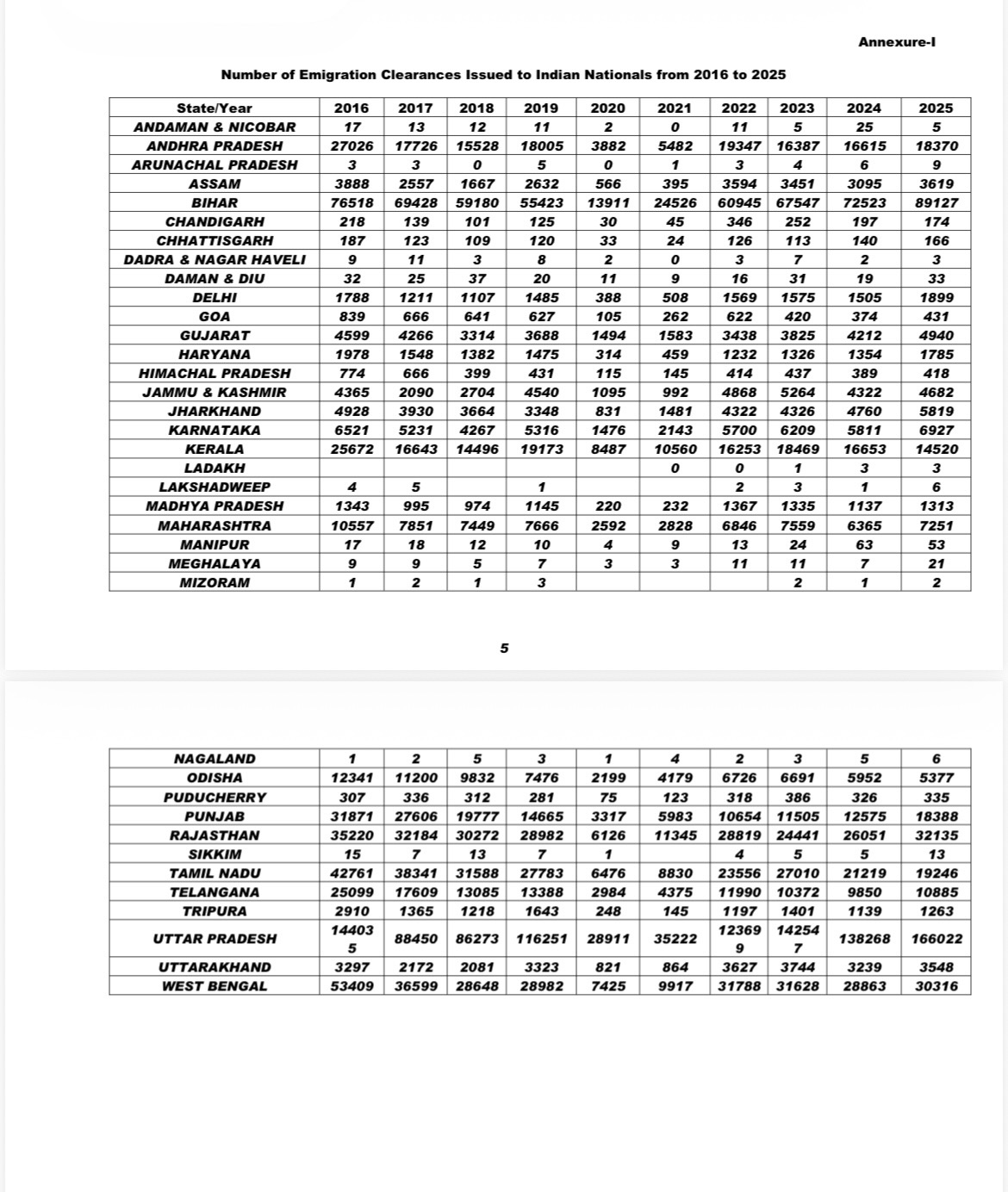
In Telangana, ECR clearances remain below pre-pandemic levels. The state recorded 25,099 clearances in 2016, which dropped to 13,388 in 2019. The pandemic year 2020 saw a collapse to 2,984. Though recovery began in 2022, Telangana reported 10,885 clearances in 2025 — still lower than its 2019 figure. In recent years, numbers have stabilised around the 10,000–12,000 mark, indicating steady but moderated migration.
The data has been tabled in Lok Sabha.
Andhra Pradesh, in contrast, has nearly regained its pre-Covid position. From 27,026 clearances in 2016 and 18,005 in 2019, the number fell to 3,882 in 2020. By 2025, however, Andhra recorded 18,370 clearances, slightly above its 2019 level. While still below its 2016 peak, the state has shown a stronger rebound compared to Telangana.
The data reflects ECR category workers — primarily low and semi-skilled Indians travelling to Gulf and other notified countries. It does not capture high-skilled migration to Western nations.
Across India, the broader pattern is clear. Most states saw a dramatic fall in 2020 and 2021, followed by a strong rebound in 2022. Large labour-sending states such as Bihar, Uttar Pradesh, Rajasthan and Punjab have recorded sharp increases in recent years. Bihar and Uttar Pradesh, in particular, have seen very high volumes post-2022, indicating renewed demand in Gulf and other notified labour markets.
Southern states show mixed trends. Kerala and Tamil Nadu, traditional overseas migration hubs, recovered after Covid but remain below their earlier peaks. Karnataka and Maharashtra have seen steady improvement but not dramatic surges.
Overall, while overseas employment opportunities have reopened after the pandemic shock, recovery has been uneven, with some states surpassing pre-Covid levels and others yet to catch up.
Screenshot