


















India’s interim trade agreement with the United States has triggered a fresh political confrontation, with Congress leader Rahul Gandhi framing it as a potential threat to farmers and the Modi government dismissing the charge as deliberate misinformation. Rahul Gandhi has positioned the agreement as a structural risk to Indian agriculture. In a series of remarks and a public post, he questioned whether the import of Dried Distillers Grains could indirectly open the door to genetically modified American corn entering India’s dairy supply chain. His argument is strategic. If dairy feed becomes import-dependent, he suggests, India’s milk ecosystem could gradually tilt toward US agricultural inputs.
He also flagged soy oil imports as a potential blow to farmers in Madhya Pradesh, Maharashtra, and Rajasthan. According to him, expanding access to US agricultural commodities could depress domestic prices and weaken local producers. He went further by warning that removing non-trade barriers may eventually pressure India to dilute its stance on genetically modified crops. His broader message is clear. Trade liberalisation must not come at the cost of farm sovereignty.
Rahul has previously extended the same line of criticism to the textile sector. He argued that cotton farmers and textile exporters could suffer if safeguards are not firmly embedded in the agreement. The subtext is political. Congress is attempting to reclaim its traditional farmer constituency by portraying the trade deal as economically disruptive.
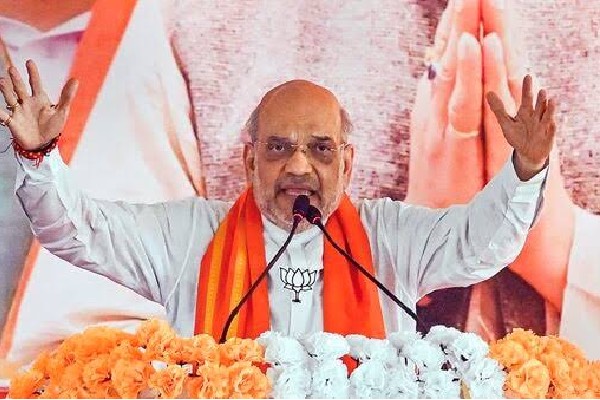
The BJP response has been equally forceful. Union Home Minister Amit Shah rejected the allegations outright and accused Rahul Gandhi of misleading the public on agreements signed with the US, EU, and UK. Shah asserted that agriculture and dairy were fully protected during negotiations. He even threw down a public debate challenge, signalling confidence in the government’s negotiating framework.
This confrontation is less about technical trade clauses and more about political positioning. For the Congress, the narrative is farm security. For the BJP, the narrative is economic confidence and global integration without domestic compromise.