




















Tamil Nadu has a long history of film stars entering politics, but their outcomes have varied sharply. As actor Vijay announces Jana Nayagan as his final film and signals a full transition into politics, the key question is whether walking away from cinema will strengthen his political future or weaken it prematurely.
History offers mixed lessons.
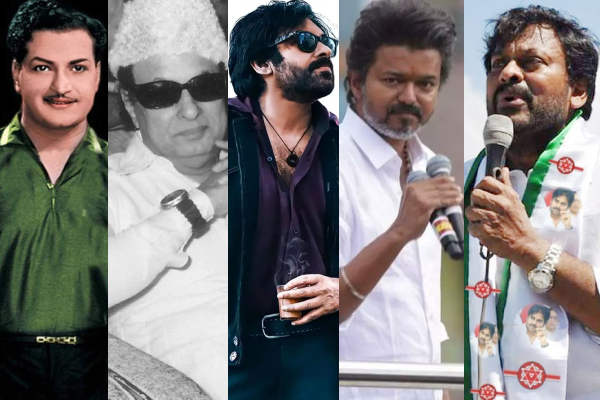
M.G. Ramachandran succeeded because his political image was already inseparable from his screen persona. Long before he formally exited films, MGR had built a welfare-driven narrative through cinema and real-world action. When he stepped away, it felt natural. Cinema had already completed its role as a political foundation.
Even N.T. Rama Rao did not cut off cinema entirely at the peak of his political journey. After entering politics and even during periods when he was not in power, NTR acted in a few films. Cinema continued to serve as a channel of mass connection, not as a distraction from politics. His gradual withdrawal, rather than an abrupt exit, ensured that his public presence remained intact while his political identity matured. This careful balance helped him sustain relevance until his leadership was firmly established beyond the screen.
Vijayakanth presents another example where stepping back from films initially helped. His image as a people’s hero translated well into politics. However, health issues and organisational weaknesses later stalled his rise. The lesson here is that cinema exit alone is not enough. Sustained political engagement matters more.
Chiranjeevi’s experience is a warning. He left the cinema abruptly, entered politics with high expectations, but without strong grassroots machinery. His popularity did not convert into durable political power. Eventually, he returned to films, while his political project faded.
Pawan Kalyan chose a different route. He never announced a complete exit from cinema. By continuing films selectively, he retained visibility while building political relevance over time. His gradual approach helped him stay connected to the public without overcommitting too early.
Against this backdrop, Vijay’s decision appears risky. Declaring Jana Nayagan as his last film may send a message of seriousness, but it also removes a powerful tool of mass connection. Unlike MGR or NTR, Vijay has not yet tested his electoral strength. Cinema still anchors his reach across generations and regions.
Politics rewards consistency, not symbolism alone. If organisational depth and grassroots presence do not quickly replace cinematic visibility, the absence may hurt.