





















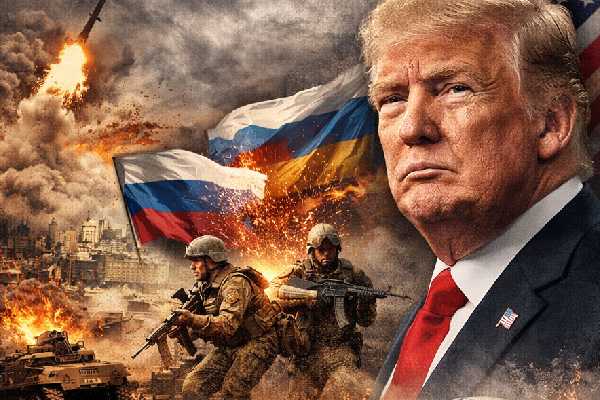



A dramatic and violent escalation has erupted in the Middle East following coordinated strikes by Israel and the United States against Iranian military and leadership targets. What began as a dangerous military operation has quickly expanded into a broader regional confrontation, drawing in Gulf states and raising fears of a larger war.
The Role of the United States
The United States has played a crucial stabilizing yet influential role. Under President Joe Biden, Washington strongly backed Israel’s right to defend itself while simultaneously urging restraint to prevent a regional war. U.S. military forces in the Middle East helped intercept Iranian missiles aimed at Israel.
As of 2025, under President Donald Trump, U.S. policy continues to emphasize strong support for Israel while maintaining pressure on Iran over its nuclear ambitions. American military bases in Qatar, Bahrain, Kuwait, and the UAE remain strategically important in deterring Iranian aggression.
The U.S. presence acts as both shield and signal. It reassures Gulf allies but also increases the risk that any Iran–Israel clash could pull American forces into direct conflict.
Death of Iran’s Supreme Leader and Other Commanders
In the most significant development, Iran’s Supreme Leader Ayatollah Ali Khamenei, the country’s highest authority since 1989, was killed in the joint military assault. Iranian state media later confirmed his death, describing it as a major shock to the nation. Khamenei had overseen Iran’s political and military strategy for decades, shaping its role in regional conflicts and its relations with both the United States and Israel.
Alongside him, several senior Iranian commanders, including key military strategists, were also reported killed during the strikes. One of these was a top commander in Iran’s military forces whose death was acknowledged by Israeli officials, underscoring the scale of the offensive.
The loss of these leaders creates a sudden vacuum at the top of Iran’s power structure and could trigger a period of internal turmoil as factions within Tehran debate the country’s next steps.
Iran’s Retaliation Across the Region
Following the strikes and confirmation of Khamenei’s death, Iran launched large waves of missiles and drones in retaliation. These retaliatory attacks were not limited to Israel. They extended to multiple Gulf states, including the United Arab Emirates, Kuwait, Bahrain and Qatar, where missiles were fired toward military bases that host U.S. forces. In several cities, air defences were activated as authorities worked to intercept incoming projectiles.
In the UAE, airport operations were disrupted as a precaution due to the conflict. Passengers at major hubs like Abu Dhabi and Dubai airports were issued urgent advisories, and parts of airspace were temporarily closed to ensure safety. Reports of explosions and intercepted missiles created moments of fear in urban areas that are usually bustling with international travel and business.
Is the War Likely to End Soon?
Despite global calls for restraint, there is currently no clear sign that the fighting will end soon. Leaders in Washington and Tel Aviv have expressed determination to maintain pressure, while Tehran has vowed sustained retaliation for the deaths of its leaders. The United States, under its current administration, has stressed that any further Iranian escalation could be met with “unprecedented force,” signalling that diplomatic de-escalation is not straightforward.
Arab states in the Gulf, while not direct combatants, have been drawn into the conflict due to the presence of U.S. military bases and logistical infrastructure. Their involvement — even if defensive — complicates diplomatic pathways and raises the stakes for regional security.
What This Means for the Region
The death of Ayatollah Khamenei marks a historic turning point. His long rule had been a defining feature of Iran’s foreign and domestic policy for nearly four decades. With him gone and senior commanders also lost, Iran’s leadership must navigate a turbulent transition while confronting external military threats.
For ordinary citizens across the Middle East, life has been disrupted by emergency alerts, airport closures, and fears of further attacks. Economies could also be affected if the conflict persists, especially in energy markets that depend heavily on stability in this region.
The war shows no sign of a rapid end. Both sides are entrenched, and with Gulf states now visibly involved, the path to a ceasefire or negotiated peace remains uncertain. The coming weeks will be critical in determining whether this confrontation expands further or whether diplomatic efforts can gain some ground to prevent even wider violence.