






















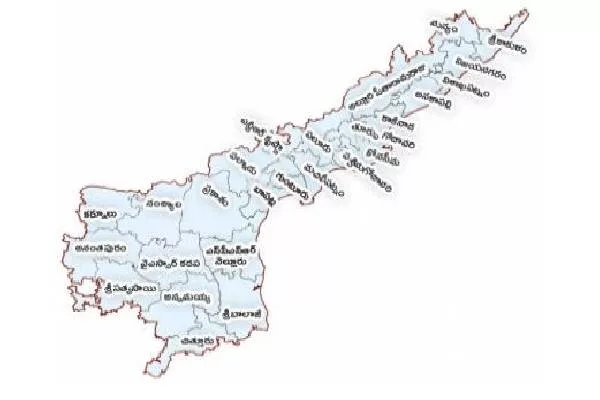


Andhra Pradesh has taken a decisive step towards restructuring urban governance with a statewide redivision of wards and divisions. The move is aimed at aligning local representation with population growth and ensuring better administrative efficiency across cities and towns. The state government has formally approved the exercise and issued detailed orders to implement the changes. Officials have confirmed that divisions and wards in municipal corporations, municipalities, and nagar panchayats will be reorganised based on population data. Urban areas that have witnessed significant growth are expected to see a sharp increase in the number of elected representatives.
This restructuring marks a shift from the earlier classification system, which was based on administrative grades. The government will now follow a population-based model to determine representation. Notifications have been issued separately for municipal corporations, municipalities, and nagar panchayats to implement the revised framework.
As part of the expansion, the number of wards across the state is expected to increase significantly. Estimates suggest that the total count will go up by around 927 wards. At present, Andhra Pradesh has about 3,916 divisions and wards combined. After the reorganisation, this number is projected to rise to nearly 4,843, reflecting the scale of the exercise.
The government has clearly defined how representation will be structured in municipal corporations. Cities with a population of up to two lakh will have 60 divisions. Those with a population between two lakh and three lakh will have 62 divisions. The number will gradually increase with population growth, reaching 66 for cities up to four lakh, 68 for up to five lakh, and 72 for up to six lakh. Cities with populations between six lakh and ten lakh will have 76 divisions. Larger urban centres with populations between ten lakh and fifteen lakh will have 86 divisions. Metropolitan corporations with populations above fifteen lakh can have up to 120 divisions.
A similar population-based approach will be followed for municipalities and nagar panchayats. Towns with a population below 30,000 will have 23 wards. This number will increase step by step with population growth, reaching 28 for up to 40,000, 32 for up to 50,000, and 36 for up to 60,000. Towns with up to 80,000 population will have 40 wards, while those nearing one lakh will have 44. Municipalities with populations up to 1.5 lakh will have 48 wards, and those above that threshold can have up to 52 wards.
The reorganisation will be based on the 2011 Census data, and the government has made it clear that these numbers will remain unchanged until the next official census results are released. This ensures stability in representation for a defined period and avoids frequent revisions.
Another important aspect of the decision is its link to upcoming local body elections. In many urban local bodies, the tenure of elected councils has already ended, and special officers are currently managing administration. The government is preparing to conduct elections soon, and this redivision exercise is being carried out in parallel to ensure that the new structure is in place before the electoral process begins.
Overall, the reorganisation signals a major recalibration of urban governance in Andhra Pradesh. By linking representation directly to population, the state aims to create a more balanced and responsive local administration system that reflects current demographic realities.