




















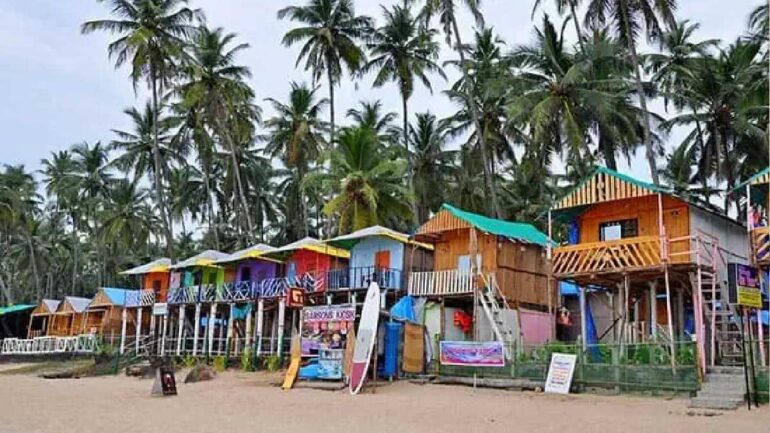
Goa’s beach shacks became far more than places serving food and drinks. They helped create an entire tourism ecosystem around beaches, generating jobs, attracting private investment and creating a unique identity that drew millions of visitors every year.
But Goa’s journey also offers cautionary lessons. Complaints about overcrowding, rising costs, traffic congestion, environmental pressures and over-commercialisation have increasingly become part of the tourism conversation.
It is perhaps this experience that Andhra Pradesh is seeking to study as it rolls out a carefully regulated Beach Shack Bar Licence policy on a pilot basis.
At the heart of the policy is a recognition that Andhra Pradesh possesses a natural asset that remains largely underutilised. With a coastline stretching more than 975 kilometres across 12 coastal districts, the state has one of the longest coastlines in India. Yet unlike Goa, Kerala or even parts of coastal Karnataka, Andhra Pradesh has not succeeded in building a strong beach tourism economy around this advantage.
The new policy attempts to change that.
What stands out is that the government has deliberately chosen a cautious and highly regulated framework rather than a free-market expansion model.
The pilot phase is restricted to just four licences, two each at Visakhapatnam and Suryalanka. The government retains complete control over future expansion based on the results of this experiment.
The policy also sharply restricts what can be sold. Unlike conventional bars, beach shacks will be permitted to serve only low-alcohol beverages such as beer, wine and Ready-to-Drink (RTD) products. Sale of IMFL and other hard liquor is completely prohibited.
The licensing framework itself is designed to ensure that only serious tourism operators enter the sector.
Only star hotels, tourism resorts and tourism department-registered establishments with beachfront access are eligible. Applicants must first obtain a recommendation from Andhra Pradesh Tourism Development Corporation (APTDC) before even applying for excise clearance.
The financial entry barriers are also significant.
Applicants must pay a non-refundable prior clearance fee of ₹2 lakh. Once clearance is obtained, a separate licence application fee of ₹10,000 must be paid. Successful operators are then required to pay an annual Retail Excise Tax of ₹7.5 lakh, which will increase by 10 percent every year. Licences are valid for three years, ensuring long-term commitment from operators rather than seasonal experimentation.
The policy also makes it clear that obtaining a licence is not simply about paying fees.
Every operator must secure Coastal Regulation Zone (CRZ) approvals, tourism clearances, food safety licences, fire safety certifications and trade licences. The shack itself must be constructed using temporary and eco-friendly materials. Permanent reinforced concrete structures are prohibited, reflecting concerns about coastal sustainability and environmental protection.
The operational requirements are equally detailed.
Separate washrooms for men and women are mandatory. Adequate parking facilities must be provided. Operators must maintain first-aid facilities, proper lighting, sanitation infrastructure, waste management systems and firefighting equipment. Every shack must also have a functioning kitchen capable of serving complete meals, ensuring that the establishments function as hospitality destinations rather than merely alcohol outlets.
Even entertainment has been regulated. Loudspeakers and amplified music beyond permissible limits are prohibited, signalling an effort to prevent beach shacks from evolving into high-decibel nightlife zones.
Perhaps the most telling provision is the restriction on operating hours. Alcohol can only be served between 10 a.m. and 8 p.m. Food service may continue beyond these hours, but liquor service cannot. This effectively positions the beach shacks as family-oriented tourism facilities rather than late-night party destinations.
Viewed purely as an excise policy, the initiative may appear modest. Viewed through a tourism lens, however, it represents one of the first structured attempts to monetise Andhra Pradesh’s coastline while maintaining regulatory oversight.
The real test will come in implementation. Tourism infrastructure succeeds not because licences are issued, but because visitors receive a safe, clean and memorable experience. Enforcement of environmental safeguards, maintenance standards and service quality will ultimately determine whether the pilot succeeds.
Goa demonstrated how beach tourism can transform a regional economy. Andhra Pradesh’s new framework suggests that the state wants the economic benefits of that model while avoiding some of the challenges that emerged along the way.
If the pilot succeeds, the four beach shacks being licensed today may eventually be remembered as the starting point of a much larger coastal tourism strategy for Andhra Pradesh.