















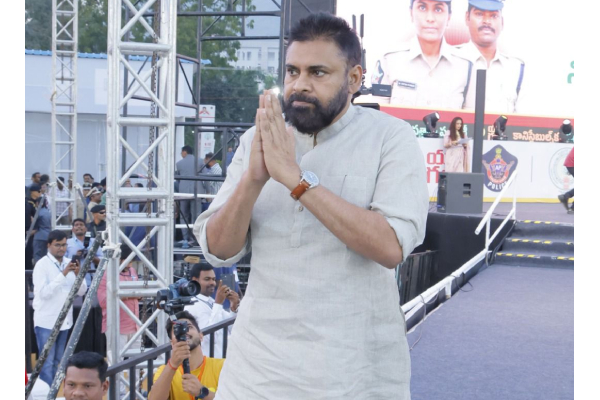
The year 2025 stands as the most defining phase of Pawan Kalyan’s public life. For the first time, his identity as an administrator overshadowed his long-standing image as a political agitator or cinematic icon. As Deputy Chief Minister of Andhra Pradesh, the year unfolded month by month as a complex mix of governance and personal trials.
What follows is not a narrative of claims, but a factual review of how his year progressed and what it revealed.
January–February: Constitutional Positioning and Administrative Tone
The early months of 2025 established Pawan Kalyan’s administrative posture. He made it clear that constitutional processes would not be bent for political convenience. His firm stance on denying Opposition status to the YSR Congress Party was articulated not as a political decision, but as a constitutional outcome of electoral arithmetic.
This period reflected his effort to frame governance within institutional boundaries, distancing himself from personalised decision-making on legislative matters. It also signalled his readiness to absorb political criticism while defending procedural clarity.
March: Ideological Shift and National Alignment
March marked a visible ideological evolution. At the Jana Sena Party foundation day, Pawan Kalyan publicly supported the Union government’s language policy debate, drawing sharp reactions from southern political circles.
This position was notable because it contrasted with his earlier advocacy for linguistic sensitivity. The shift aligned him more clearly with the National Democratic Alliance and indicated a recalibration of his national political positioning. The reaction from Tamil Nadu leaders underscored that his words now carried inter-state political weight, not just regional resonance.
April: Personal Crisis and Public Empathy
April revealed a different side of Pawan Kalyan. When his son was injured in a fire accident at a school in Singapore, he immediately flew out to be with his family. The incident briefly paused his public schedule, but it also humanised him in the public eye.
His public gratitude toward institutions and individuals who supported his family reflected restraint and composure. The episode reinforced the perception that his leadership was grounded not only in authority, but also in personal vulnerability.
May–June: Governance Narrative and Celebration of Power Shift
By mid-year, Pawan Kalyan shifted focus toward political messaging. He called for June 4 to be observed as a symbolic celebration of democratic restoration in Andhra Pradesh. The appeal was not limited to party workers but framed as a public cultural event. This phase demonstrated his ability to blend governance with mass mobilisation. Critics viewed it as political triumphalism, while supporters saw it as reclaiming democratic space after years of perceived institutional erosion.
July: Cinema, Silence, and Selective Engagement
July brought cinema back into focus. With Hari Hara Veera Mallu: Part One, Pawan Kalyan addressed the media as an actor, not a minister. He consciously avoided aggressive promotion, stating discomfort with marketing films. This moment highlighted how he compartmentalised his roles. Cinema remained part of his identity, but it did not dominate his public discourse. The careful separation reassured supporters that governance was not being sidelined, even as critics continued to question divided attention.
August: Party Discipline and Organisational Control
August was defined by internal consolidation. Preparations for the ‘Senatho Senani’ meetings revealed his emphasis on cadre discipline, youth engagement, and ideological clarity. More importantly, his unapologetic suspension of party leaders for misconduct reinforced a zero-tolerance approach to indiscipline.He made it clear that loyalty would not override principles, even within his own party.
September: Popularity Beyond Politics
September demonstrated the enduring power of his public appeal. The unprecedented fan-driven auction of a benefit show ticket for They Call Him OG illustrated how his cinematic image still mobilised financial and emotional support for his party.
October: Youth, Vision, and Long-Term Thinking
In October, a reflective message recalling his interaction with youth after Cyclone Titli resurfaced as a defining ideological statement. His emphasis on “future, not freebies” resonated widely.
This articulation positioned him against short-term populism and aligned his governance narrative with sustainability and aspiration. It was one of the clearest expressions of his long-term political philosophy during the year.
November, Pawan Kalyan focused on strategic messaging and targeted governance. He projected confidence in the stability of the ruling coalition and supported time-bound action plans for coastal and rural livelihoods, indicating a shift toward structured delivery rather than ad-hoc decisions.
December centred on follow-through. Commitments made to government schools were completed with the supply of libraries and computer facilities. He also addressed police welfare during recruitment programmes and continued social support initiatives, particularly for disabled sportspersons.
Governance on the Ground: Villages, Roads, and Welfare
Parallel to these public moments, 2025 saw consistent administrative action. Village-level interventions in districts like Alluri Sitarama Raju and Mangalagiri resulted in immediate road approvals following direct appeals from individuals such as constable Baburao.
Drinking water projects in tribal agency areas were cleared after on-site assessments. Support for visually impaired sportspersons and infrastructure upgrades for government schools, including in Chilakaluripet, reflected a welfare approach focused on functionality rather than symbolism.
What He Did Not Focus On
Urban governance remained outside his core attention. Municipal reforms, city infrastructure, and metropolitan environmental planning did not feature prominently in his agenda. Large-scale institutional restructuring within Panchayat systems also progressed slowly.
Overall Assessment
Pawan Kalyan’s 2025 was a year of motion rather than consolidation. His popularity amplified his governance, but also raised expectations that he needed to institutionalise. For now, 2025 records a leader actively shaping his role, not merely occupying it.