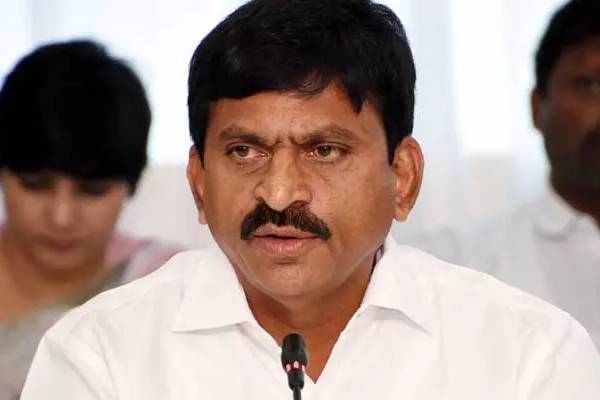
















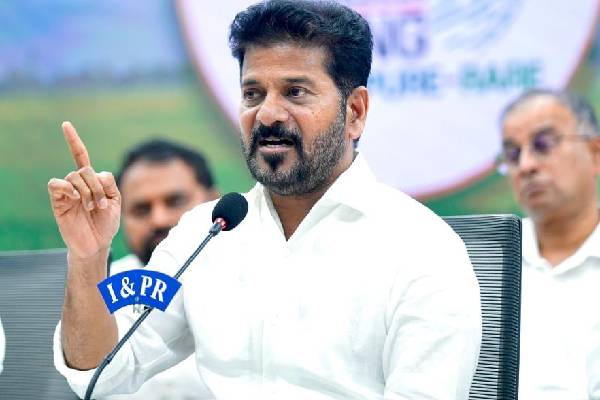
Telangana Chief Minister A. Revanth Reddy on Monday proposed a hybrid model for the forthcoming delimitation exercise, saying parliamentary representation should be based on both population and economic contribution, and not population alone.
Hybrid Formula for Seat Allocation
On delimitation, Mr. Reddy said a purely population-based redistribution of seats would punish states that successfully implemented family planning and reward states where population growth remained high.
He said southern states had reduced fertility rates, improved human development indicators, and made stronger contributions to national revenue, employment generation and industrial growth. Yet, under a population-only formula, their voice in Parliament would shrink relative to larger northern states.
To address this, he proposed a hybrid model for the expected increase of 272 Lok Sabha seats:
• 136 seats to be allocated on the basis of population
• 136 seats to be allocated on the basis of Gross State Domestic Product (GSDP)
He said democracy must recognise both people and performance.
Addressing a detailed press conference, Mr. Reddy accused the Union Government of creating confusion by linking women’s reservation with delimitation. He said both issues were independent and should be debated and implemented separately.
According to him, the Centre was attempting to portray opposition parties as anti-women by combining the two matters. He reiterated that the Congress had fully supported the Women’s Reservation Bill and remained committed to women’s political empowerment.
The Chief Minister said women had historically received equal voting rights under the Constitution and noted that the Congress had given women opportunities in several top constitutional positions, including Prime Minister, President, Lok Sabha Speaker, Governor and Chief Minister. He also recalled that former Prime Minister Rajiv Gandhi introduced reservations for women in local bodies, while Sonia Gandhi pushed for reservation in legislatures.
He alleged that if the law had been implemented immediately after passage, around 181 women could have entered the Lok Sabha in the 2024 elections. Instead, he said, implementation was postponed by linking it to the census and delimitation process.
Numbers Matter in Politics
Mr. Reddy stressed that in politics, numbers determine influence. He cited the fall of the Atal Bihari Vajpayee government by a single vote to underline how parliamentary arithmetic shapes power.
He said the issue was not percentages, but final seat numbers and the resulting balance of power between regions.
The Chief Minister warned that a 50% increase in seats without a balanced formula would widen the gap between North and South India.
He claimed southern states currently account for around 130 seats, which would rise to 195 after a 50% increase, while northern states would rise from 413 to 621 seats. This, he said, would significantly alter the political weight of regions in Parliament.
He also said smaller states such as Delhi and Punjab could face long-term disadvantages.
Mr. Reddy called for a national consultation process before any final decision on delimitation. He demanded:
• An all-party meeting
• Consultations with constitutional experts and institutions
• Discussions in all State Assemblies
• Full debate in Parliament
• A structured roadmap to complete the process by March 2028
He said such a path would avoid unnecessary tensions and ensure fairness.
The Chief Minister also criticised the BJP, claiming that since its formation in 1980, the party had appointed 15 national presidents but no woman to the top post.
He questioned the BJP’s commitment to women’s empowerment and said those attacking Congress should first explain their own record.
Mr. Reddy said Telangana MPs had fought for statehood and would now fight to protect fair representation in Parliament. He announced plans to write to southern states and smaller states to build a common front on the issue.
He maintained that delimitation was not merely a political party issue, but one that would shape the future balance of power in the country.