




















The political turbulence unfolding in Bangladesh is no longer an internal matter alone. It has steadily evolved into a strategic concern for India, affecting diplomacy, border security and minority safety. What began as a domestic power transition has now spiralled into a broader crisis with consequences that extend well beyond Dhaka.
At the centre of this upheaval is the exit of Sheikh Hasina, whose long rule kept Islamist groups and street violence largely in check. Her exile in New Delhi created a political vacuum that the interim administration has struggled to fill. Since then, Bangladesh has witnessed rising unrest, eroding public confidence and unsettling its neighbours.
Diplomatic Friction Moves to the Streets
Ties between New Delhi and Dhaka have visibly frayed. Both countries have summoned each other’s diplomats amid growing mistrust. Protests outside diplomatic missions in Dhaka and New Delhi marked a rare and troubling departure from diplomatic norms. India cited security threats while temporarily shutting visa services, while Bangladesh accused India of failing to protect its High Commission.
Tensions escalated sharply after the lynching of a Hindu labourer in Bangladesh. In India, Hindu groups, including the Vishwa Hindu Parishad, staged protests demanding protection for minorities. Dhaka responded by accusing India of allowing demonstrations that it claimed undermined Bangladeshi sovereignty. The result has been a diplomatic standoff fuelled by public anger on both sides.
Violence and Fear Within Bangladesh
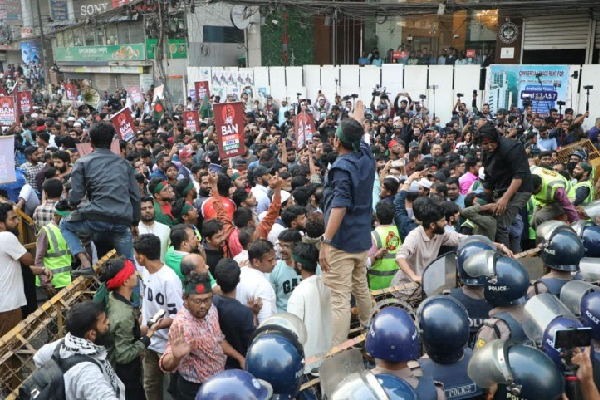
Inside Bangladesh, violence has become disturbingly routine. The killing of student leader Sharif Osman Hadi triggered days of unrest, attacks on media houses, and widespread vandalism. Newsrooms were torched, journalists were trapped inside burning buildings, and law enforcement responses were slow or absent.
Human rights groups estimate that hundreds have died in mob violence this year. Street clashes, crude bomb attacks, and communal incidents have become increasingly common, particularly in Dhaka. For India, this instability raises immediate concerns about cross border spillover and radicalisation.
Political Vacuum and the Rise of Extremism
The interim government led by Muhammad Yunus has found it difficult to restore order. Critics argue that indecision and hesitation have allowed extremist voices to re-emerge. Of particular concern is the renewed influence of Jamaat e Islami, which had been politically marginalised under Hasina.
Its growing presence in student movements and street protests has alarmed secular groups in Bangladesh and strategic planners in India. Open anti-India rhetoric from radical factions has further deepened New Delhi’s anxiety.
Tarique Rahman and a Fragile Political Hope
Against this backdrop, Tarique Rahman, head of the Bangladesh Nationalist Party, is preparing to return after nearly two decades in exile. With elections expected early next year and the Awami League sidelined, his return carries significant weight.
While India and the BNP have historically shared an uneasy relationship, New Delhi now views a stable elected government as preferable to prolonged chaos or extremist dominance. Rahman has publicly rejected alliances with radical groups and criticised the interim government’s authority to take long term foreign policy decisions. His stance suggests an attempt to project moderation at a critical moment.
Media Under Attack and Shrinking Civic Space
The arson attacks on Prothom Alo and The Daily Star symbolised a deeper crisis. Journalists who once hoped for greater freedom after Hasina’s departure now face unpredictable mob violence and weak state protection. Many describe the present atmosphere as more frightening than past repression because it is chaotic and uncontrolled.
A Defining Moment for the Region
India has repeatedly voiced concern over attacks on minorities, journalists, and diplomatic missions. Beyond diplomatic protocol, the stakes are high. Bangladesh’s stability is vital for India’s security, border management, and counter terrorism efforts.
Whether Bangladesh can restore order through credible elections and firm governance will shape not only its democratic future but also the future of India Bangladesh relations. For now, the situation remains volatile, and the region is watching with cautious concern.