
























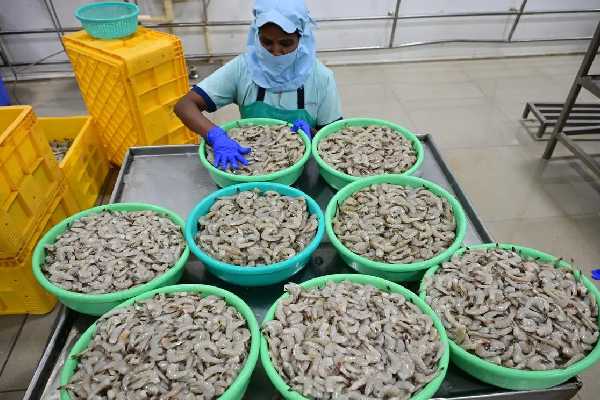
The ongoing conflict in West Asia is beginning to show serious economic consequences far beyond the battlefield. One of the sectors now feeling the pressure is the aquaculture industry in Andhra Pradesh. The state is one of India’s largest producers of shrimp, and most of its harvest is meant for international markets. As global trade slows due to the war, shrimp exports have been disrupted. This has pushed thousands of farmers into a difficult financial situation.
Shrimp farming plays a major role in the rural economy of coastal Andhra Pradesh. Large parts of the Godavari districts depend on this industry for income and employment. Farmers invest heavily in feed, seed, electricity, and maintenance. They depend on steady export demand to recover these costs. The present uncertainty in international trade has broken that balance.
Prices Fall as Exports Slow
The immediate impact has been a sharp fall in shrimp prices. Export movement has slowed because of global tensions linked to the conflict between Iran and Israel. Buyers in international markets are cautious, and shipments are getting delayed. As a result, local processing companies have started lowering procurement prices.
Farmers say shrimp prices have fallen by about ₹30 to ₹40 per kilogram in just a few days. This sudden drop has created panic across farming communities. For many farmers the losses are severe. A farmer producing one ton of shrimp is now facing losses close to ₹40,000.
Godavari Districts Under Pressure
The impact is most visible in the Godavari region, which is the heart of shrimp cultivation in the state. In West Godavari district alone shrimp farming spreads across nearly two lakh acres. Most of the production from these ponds is meant for export markets such as the United States, Europe, and East Asia.
With exports slowing down, the local market is unable to absorb the supply. Prices are falling rapidly. Farmers say the price of 30 count shrimp has dropped from around ₹510 to ₹470 per kilogram. The price of 40 count shrimp has declined from ₹410 to about ₹360 per kilogram. These changes have come within a short period, leaving farmers with little time to respond.
Shrimp farming is already a high investment activity. Farmers spend heavily on feed, medicines, pond maintenance, and electricity. When prices fall suddenly, it becomes difficult to recover these expenses. Many farmers are now worried about clearing loans taken for the current crop cycle.
Uncertainty in global markets has also become a major concern. Farmers say international developments are now directly affecting local agriculture. The present crisis has exposed how vulnerable the aquaculture sector is to global economic shifts.
Farmers Demand Government Support
Many farmers have also raised concerns about the role of processing units and agents. They believe some companies are forming syndicates and deliberately lowering prices by citing the war situation. Farmers say this has added to their financial distress. Aquaculture farmers are now urging the Andhra Pradesh government to intervene.