























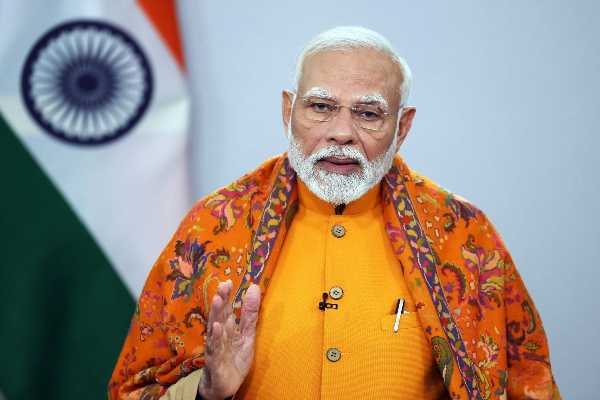
Prime Minister Narendra Modi’s address to the nation after the defeat of the Constitution (131st Amendment) Bill and the Delimitation Bill was not just a response to a legislative setback. It looked like a carefully planned political move. On the surface, the government failed to secure the numbers needed to pass a major constitutional reform linked to women’s reservation. But in political terms, Modi has already turned that defeat into an advantage.
In politics, victory is not always defined by what happens inside Parliament. Sometimes the bigger win lies in shaping public opinion outside it. That is exactly what Modi appeared to do.
A strategic setback that puts the Opposition on the defensive
The failed Bill was linked to two emotionally and politically powerful issues. One was 33 percent reservation for women in the Lok Sabha and State Assemblies. The other was delimitation, a subject that has already triggered intense debate across the country.
By connecting women’s reservation with delimitation, the government created a high-stakes political frame. Once the Bill was defeated, Modi immediately moved to define the narrative. In his national address, he accused the Opposition of blocking justice for women and crushing their aspirations. That message was sharp and designed to travel far beyond Parliament.
The timing also matters. With Bengal and Tamil Nadu in election mode, women voters are an especially influential force. Modi’s message was not limited to a constitutional argument. It was aimed at building an emotional connection with women voters and portraying the NDA as the side that tried to act, while the Opposition stood in the way.
That is where the political calculation becomes clear. Even without passing the Bill, the BJP can now argue that it fought for women’s representation and that its rivals denied women their due. That line has the potential to create long-term electoral value.
Turning a complex constitutional debate into a public campaign
One of the biggest outcomes of this episode is that delimitation is no longer a technical topic discussed only by experts. It has now entered mainstream political conversation.
For decades, India has continued with a parliamentary structure shaped by older population realities. Today, the country has a population of more than 140 crore, yet the Lok Sabha still has only 543 elected members. In many constituencies, the burden on a single MP has become enormous. One member represents large segments of the population despite massive growth in voter numbers over the years.
That imbalance is now being discussed more openly. The government has effectively brought the debate to the public. It has pushed the argument that if representation does not expand, democracy itself begins to weaken in practice. When people feel their voices are too distant from Parliament, the demand for structural reform becomes easier to justify.
This is where Modi’s politics becomes more layered. The defeat of the Bill may have helped the government explain delimitation to the public in a far more powerful way than a routine policy discussion ever could.
The southern concern and the effort to soften resistance
The biggest resistance to delimitation has come from southern states. The concern is simple and politically serious. If future seat allocation is driven mainly by population, states that controlled population growth more effectively could lose relative political weight. That fear has shaped much of the southern response.
This is another reason why Modi’s move appears strategic. By linking women’s reservation to delimitation, he did not just test the numbers in Parliament. He also pushed the country into discussing whether delimitation can be presented as necessary and nationally beneficial.
Opposition celebration may help Modi more than the vote itself
The Opposition may have won the vote, but the celebration that followed could prove politically costly. That is because optics matter as much as arithmetic in a battle like this.
When the government frames the issue as women’s representation and the Opposition responds with visible triumph after the Bill’s defeat, it creates an opening for a powerful counterattack. Modi has already used that opening. His accusation was simple. He suggested that those celebrating were effectively celebrating the blocking of women’s empowerment. It gives the BJP a message that is easy to repeat in campaign speeches, social media clips, and public meetings. It is easy for voters to understand. And it puts the Opposition in a reactive position.
That is why this moment may outgrow the parliamentary vote itself. The legislative defeat is one event. The public narrative built around it could become much bigger.
Modi and Shah rarely play only for the immediate round
One reason this episode stands out is that it fits a larger pattern in BJP’s strategy under Modi and Amit Shah. Their politics often operate on multiple levels at once. There is an immediate legislative goal and a medium-term electoral impact. Then there is the long-term effort to shape public opinion around a national agenda. The failed bill does not look like a simple defeat. but looks like a move that still serves a larger political purpose in the BJP’s view.
A defeat in Parliament, a gain in political ground
The most important takeaway is this. Modi may not have secured the constitutional majority required in Parliament, but he still has advanced his political objective. He has shifted the debate from numbers to narrative. He has made women’s reservations a moral issue. He has brought delimitation into the centre of public discussion. And he has placed the Opposition in a position where every response risks sounding defensive.
That is not a small achievement.