






















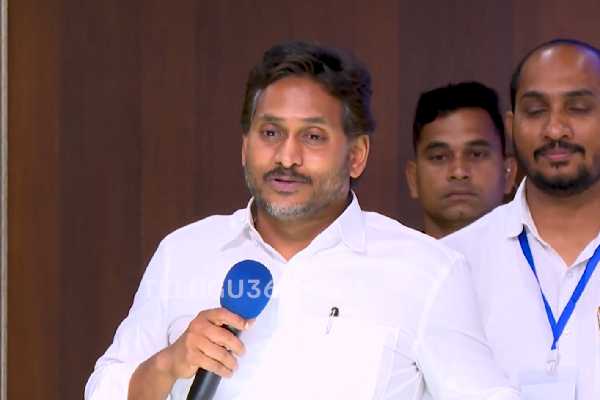
YSR Congress Party chief Y. S. Jagan Mohan Reddy has once again found himself at the centre of political attention, this time for two sharply contrasting reasons. On one side, he has extended strong support to the proposed implementation of the Women’s Reservation Act. On the other hand, his remarks claiming credit for the ArcelorMittal steel plant have triggered intense criticism.
In a post on X, Jagan Mohan Reddy expressed full support for the amendments linked to the Women’s Reservation Act, 2023. He welcomed the move to enable its implementation by 2029 and described it as a significant step toward strengthening women’s participation in politics. He reiterated that the YSR Congress Party has consistently prioritised women’s empowerment. He pointed to the party’s decision to implement 50 percent reservation for women in local bodies, nominated posts, and even in certain government contracts as evidence of this commitment. He also stated that ensuring women emerge as leaders at every level of democracy has always been a core objective of his political approach. The post also tagged Prime Minister Narendra Modi, indicating alignment on this particular reform.
At the same time, Jagan’s political messaging has come under scrutiny following his comments at a party meeting in Addanki, where he claimed that he was responsible for bringing the ArcelorMittal steel plant to Andhra Pradesh. This claim has drawn sharp criticism, who argue that there is little evidence to support his assertion.
Many point out that during his tenure as Chief Minister, there were no major public developments or announcements related to the ArcelorMittal project. They highlight that the only visible association was a meeting and photograph with Aditya Mittal at the World Economic Forum in Davos. According to them, using that interaction as the basis to claim full credit for the project stretches credibility.
Opposition voices have gone further, accusing Jagan of attempting to appropriate achievements that belong to subsequent efforts and changing industrial conditions in the state. They argue that Andhra Pradesh struggled to attract large-scale industrial investments during his five-year tenure and that some companies even withdrew or delayed plans during that period. In contrast, they claim that the current momentum in attracting investments is driven by a different policy environment and renewed engagement efforts.
Social media platforms have seen a wave of reactions, with users questioning the basis of Jagan’s claims and highlighting inconsistencies in the narrative. As Andhra Pradesh continues to position itself as an investment destination, the question of who deserves credit for major projects is likely to remain a recurring theme. In this context, political claims are no longer judged only by rhetoric but also by timelines and documented actions.