

























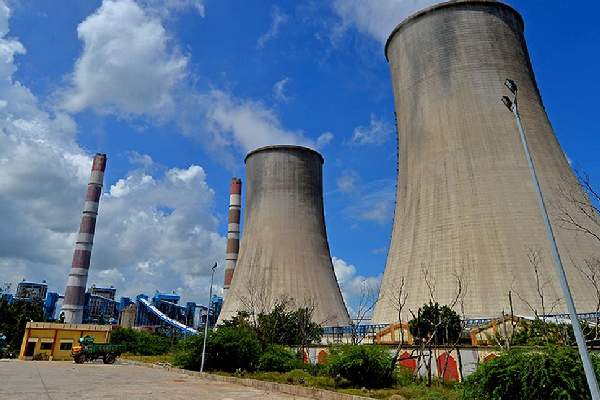
AP Genco’s record-breaking power generation of 6,009 megawatts has done more than set a new benchmark. It has quietly settled an important debate about the future of the state’s power sector. During the YSRCP government, privatisation was being projected as the only solution. However, this performance has shown that the real problem was never public ownership. The failure lay in weak policy decisions.
On Saturday, the utility supplied a total of 6,009 megawatts to the state grid. Of this, 5,828 megawatts came from thermal power plants and 181 megawatts from hydel sources. This performance marks a turning point for the state’s power sector and reflects a clear improvement in operational efficiency.
Compared to previous years, nearly 1,500 additional megawatts are now being generated every day through thermal plants alone. This surge has been made possible by better plant management and a consistent supply of quality coal. What was once seen as a struggling system is now delivering reliable results.
AP Genco and AP Power Development Company Limited together operate thermal units with an installed capacity of 6,610 megawatts across Vijayawada, Kadapa, and Nellore districts. Not long ago, producing even 4,000 megawatts from these units was difficult. Today, the same plants are generating 5,828 megawatts, with an average plant load factor of nearly 89 percent. In the power sector, such efficiency levels are considered exceptional and point to disciplined maintenance and improved planning.
Hydel power generation has also played a supporting role despite limited water availability in reservoirs. The Machkund project contributed 120 megawatts, while the Nagarjunasagar right canal pump house supplied 40 megawatts. The Hampi power house added another 14 megawatts to the grid. Even with constraints, these contributions helped push total generation beyond the 6,000 megawatt mark, underlining the system’s flexibility.
A major factor behind this turnaround has been the renewed focus on coal quality. In the past, the Krishnapatnam thermal plant suffered due to poor fuel supply, which restricted output to less than half of its capacity. Attempts by the previous government to privatize its management were dropped after strong resistance from employees. After the coalition government took charge, priority was given to securing better coal. Earlier, even coal with 5,000 GCV was hard to obtain. Now, higher-grade coal of around 5,800 GCV from Eastern Coalfields is being used along with washed coal. This change alone has lifted Krishnapatnam’s output to a peak of 2,063 megawatts, compared to the earlier range of 1,200 to 1,400 megawatts.
Higher generation within the state has also eased financial pressure on power distribution companies. Officials estimate that about 50 million additional units of electricity are now available, especially during peak demand hours. This has reduced the need to buy expensive power from the open market. In the 2024–25 financial year, discoms spent close to ₹3,000 crore on market purchases, with prices reaching up to ₹10 per unit. Power bought through advance agreements cost even more, averaging around ₹15 per unit. By December of the 2025–26 financial year, spending on power purchases stood at about ₹1,700 crore. With no sharp rise in demand expected in the remaining months, total spending is likely to remain below ₹2,000 crore. This is expected to spare consumers from additional true-up charges.
The plant-wise numbers further highlight the scale of the achievement. Vijayawada Thermal Power Station is producing 2,222 megawatts against its capacity of 2,560 megawatts. Rayalaseema Thermal Power Project is generating 1,543 megawatts from a capacity of 1,650 megawatts, crossing 93 percent efficiency. Krishnapatnam thermal plant is delivering 2,063 megawatts out of its 2,400 megawatt capacity, close to 86 percent utilization.
This record-breaking performance demonstrates the transformative power of focused governance and attention to fundamentals in the public sector utility sector. AP Genco’s achievement strengthens grid stability, reduces costs, and builds confidence in the state’s power system. More importantly, it sends a clear message that consistent policy decisions and efficient execution can produce results that benefit both the economy and consumers.