

















Tamil Nadu politics is entering a sensitive and strategic phase as the state moves closer to Assembly elections. Political parties are recalibrating their outreach. Voter blocs that were once treated as peripheral are now gaining attention. Among them, Telugu-speaking communities are emerging as a decisive force. Within this space, the Kamma community has begun asserting that its numerical strength has not translated into political influence.
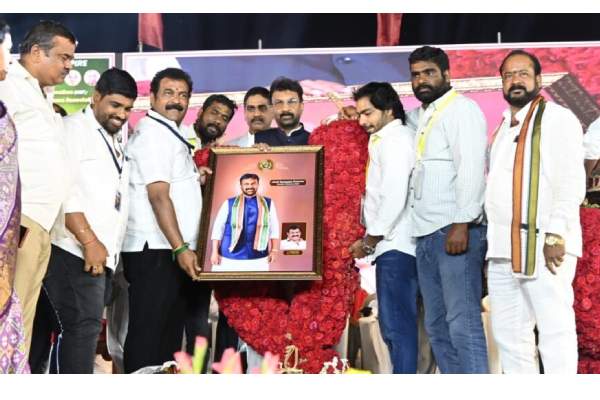
This growing sentiment found a powerful platform at the recent Kamma Mahanadu organized by the Kamma Global Federation near Sriperumbudur in Tiruvallur district. The event was one of the largest gatherings held by the Federation since its formation in 2024 and reflected a shift from social networking to political articulation.
From Demographic Strength to Political Underrepresentation
The Kamma community forms a significant share of Tamil Nadu’s population. Estimates suggest that nearly one third of India’s Kamma population resides in the state. Yet their political presence remains limited. Despite comprising around eight per cent of the population, the community currently has only a small number of MLAs and MPs. This gap between numbers and representation has fueled frustration. Speakers at the Mahanadu argued that the community has consistently delivered votes without receiving a proportional share of space in decision-making. The absence of leadership positions has reinforced the feeling of being treated merely as an electoral resource.
Political Message Gains Clarity
Addressing the gathering, Jetti Kusuma Kumar, Founder and President of the Federation, delivered a message that was both direct and strategic. He emphasized unity and organization as the foundation of political relevance. His call was not aligned to any single party. Instead, he made it clear that KGF would support Kamma candidates across party lines. The demand was explicit. The community should aim for at least thirty MLAs in the Tamil Nadu Assembly and eventually a Deputy Chief Minister position. This was not framed as ambition alone but as a correction of long standing imbalance.
Tamil Nadu was selected deliberately as the venue. The state has deep historical links with the Kamma community. Regions around Chennai and Kanchipuram have produced administrators, industrial pioneers, and political figures over decades. Despite this legacy, modern electoral politics has not reflected the same prominence.
Security Concerns and the Politics of Vulnerability
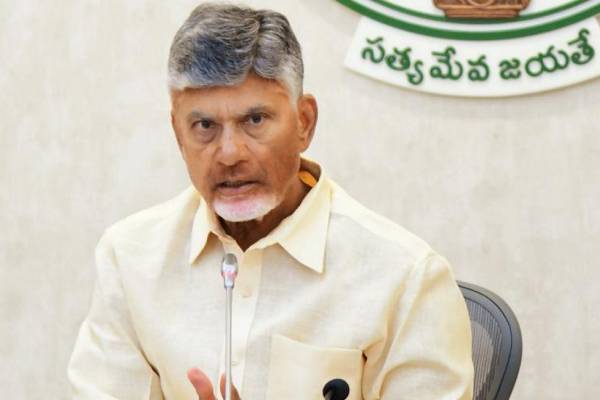
The speech also touched upon a deeper concern. Kusuma Kumar referred to the arrest of Chandrababu Naidu to underline what he described as the vulnerability of the community in the absence of collective strength. His argument was clear. If a nationally known leader could be targeted, ordinary members stood even more exposed. This framing shifted the narrative from representation to protection. Unity was presented not only as a political tool but as a shield against perceived institutional and political pressures.
Beyond Politics. Toward Social Infrastructure
The Mahanadu was not limited to political messaging. Several speakers highlighted the need for structured social support. Proposals included the creation of a global trust to assist economically weaker members of the community. Immediate financial commitments were announced on the stage, reinforcing the idea that political assertion must be backed by social responsibility. This approach helped position Kamma Federation as an organization that seeks legitimacy beyond electoral arithmetic.
The larger implication of the Kamma Mahanadu lies in its timing and tone. It does not announce a new party. It does not endorse an existing one. Instead, it introduces a negotiating framework. Political parties in Tamil Nadu may now be forced to engage with the community not just as voters but as stakeholders with defined expectations. Whether this movement translates into seats and executive power will depend on execution and unity. What is clear is that the Kamma community is no longer content with symbolic recognition. It wants measurable political outcomes in Tamil Nadu politics.