






















India’s aviation sector has been left in an unusual spotlight after IndiGo, the country’s largest airline, cancelled thousands of flights across major airports over the past week. Passengers in Delhi, Bengaluru, Chennai, Hyderabad and several major Indian cities faced long queues, mounting delays and unexpected cancellations. The airline said that the operations will stabilise by December 10th, yet the crisis has raised much bigger questions about planning, regulation and the structure of India’s aviation ecosystem.
Crew Shortages, New Duty Rules and a Perfect Storm:
The disruption began with the transition to new crew duty-time regulations. These rules were designed to improve flight safety by increasing rest hours for pilots and tightening limits on overnight operations. Airlines had known about the transition, but IndiGo, with its vast network and dense scheduling model, struggled the most. Longer rest windows, fatigue-related call-outs and limited standby crews converged at the same time. The airline simply could not reshuffle rosters fast enough, and flight cancellations began spreading across the network. While other carriers also felt pressure, none reached this level of breakdown. That contrast placed IndiGo’s operational planning under a magnifying lens.
Why the Aviation Ministry Came Under Fire:
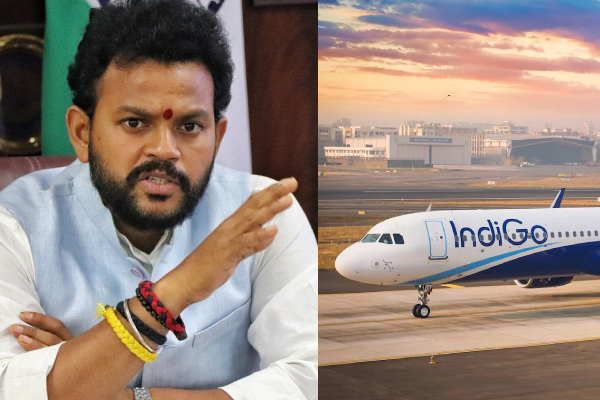
In any major public disruption, attention naturally shifts to the aviation ministry. People look for visible reassurance, briefings and explanations. But this time, the debate took a sharp political turn for an unexpected reason. During a television discussion, a party spokesperson casually remarked that “Nara Lokesh is also looking into the issue”. The line was not meant to suggest he had any authority or involvement in aviation operations. It was a general comment on political attention to the crisis. Yet that single phrase was enough to trigger a wave of criticism directed towards Aviation Minister Ram Mohan Naidu, who represents TDP.
The minister suddenly became the face of the controversy, not because of any failure on his part, but because a stray remark was amplified and turned into a political talking point. The criticism did not reflect how the aviation ministry actually functions. It oversees policy, safety norms and passenger protection, but it does not and cannot micromanage flight rosters. The crisis was operational, not political, and the ministry’s role was to ensure accountability rather than micro-management of the airline.
DGCA’s Powers and Its Limits:
The Directorate General of Civil Aviation sits at the centre of regulatory action. It enforces safety norms, audits airlines, issues notices and demands corrective steps. It can question preparedness, planning and compliance, but it cannot run airlines or interfere in real-time scheduling.
During the IndiGo chaos, the DGCA issued notices to top management, asking why the airline failed to anticipate the fallout of new duty rules. This was not about punishing cancellations but about assessing the planning gap that caused them. In moments like these, the relationship between the DGCA and the aviation ministry becomes crucial. The regulator enforces; the ministry guides. They work in coordination but maintain separate responsibilities.
Has India Become Too Dependent on One Airline?
IndiGo controls more than half of India’s domestic aviation market. When it collapses, the entire system trembles. The crisis revealed how deep this dependence has become. A single airline’s internal breakdown caused nationwide effects, fare hikes and airport-wide delays. This raises a policy question that will continue to echo even after operations stabilise:
Parliament Steps Into the Conversation:
The Parliamentary Standing Committee on Transport is preparing to call airline executives and aviation officials to explain how the situation spiralled so quickly. Some MPs experienced cancellations themselves, which intensified pressure. There is also concern about fare spikes during the disruption. While such reviews are standard in major crises, this episode is likely to influence future guidelines on manpower planning and regulatory transitions.
What Passengers Want Now?
For passengers, the priorities remain clear: timely refunds, transparency, predictable cancellation rules and protection from sudden fare surges. IndiGo says it has processed significant refunds and introduced waivers, but the public will judge the airline by how quickly individual cases are resolved.
A Crisis that Exposes a Larger Weakness:
This episode is about far more than operational missteps. It exposes a structural vulnerability in Indian aviation: heavy dependence on a single carrier, tight crew utilisation models and abrupt transitions to new norms.
It also illustrates how quickly politics can overshadow the real issue. Ram Mohan Naidu was blamed, even though he had done nothing wrong. One small, unclear comment of his party member was misunderstood and blown out of proportion, and suddenly everyone started targeting him
The IndiGo chaos will pass. Flights will stabilise. Schedules will normalise. But the lessons on planning and system resilience are unlikely to be forgotten. This crisis may very well shape how India’s aviation sector prepares for disruptions in the years to come.